

Description
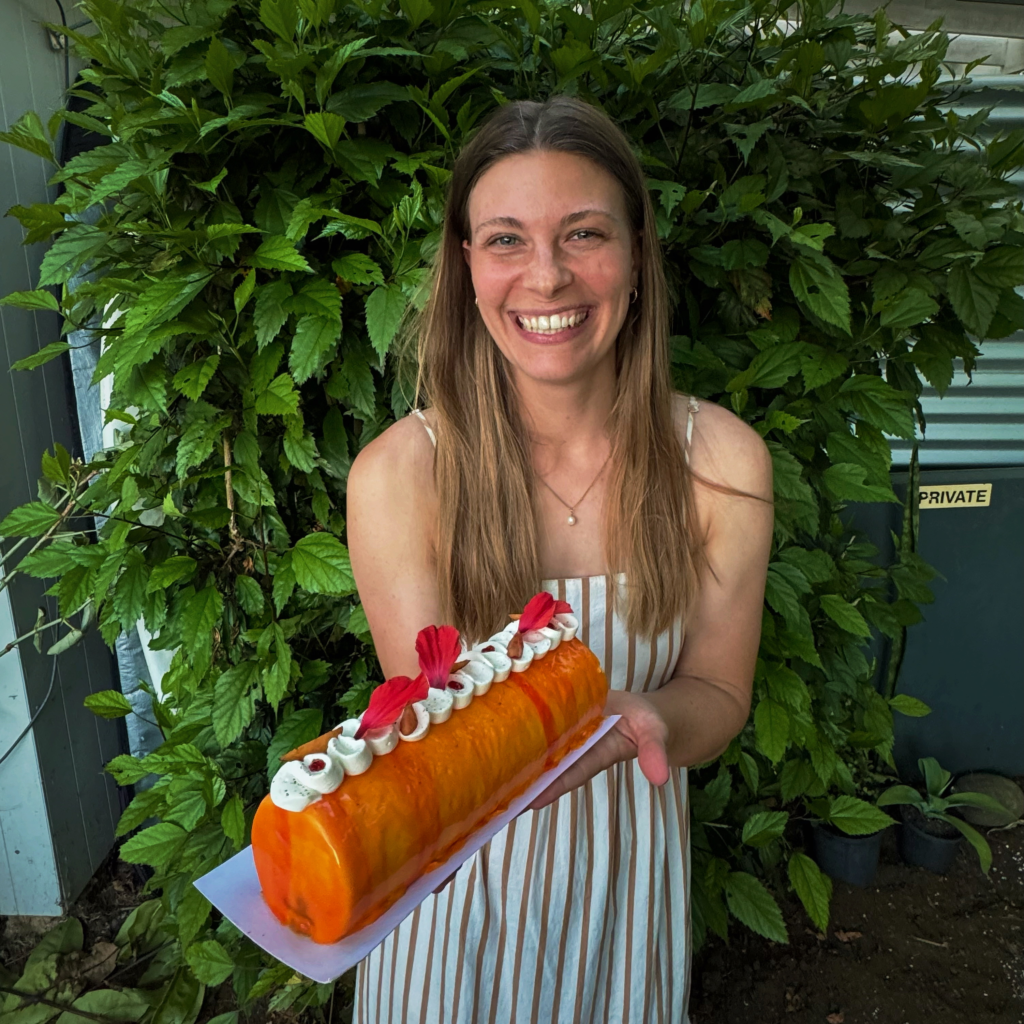
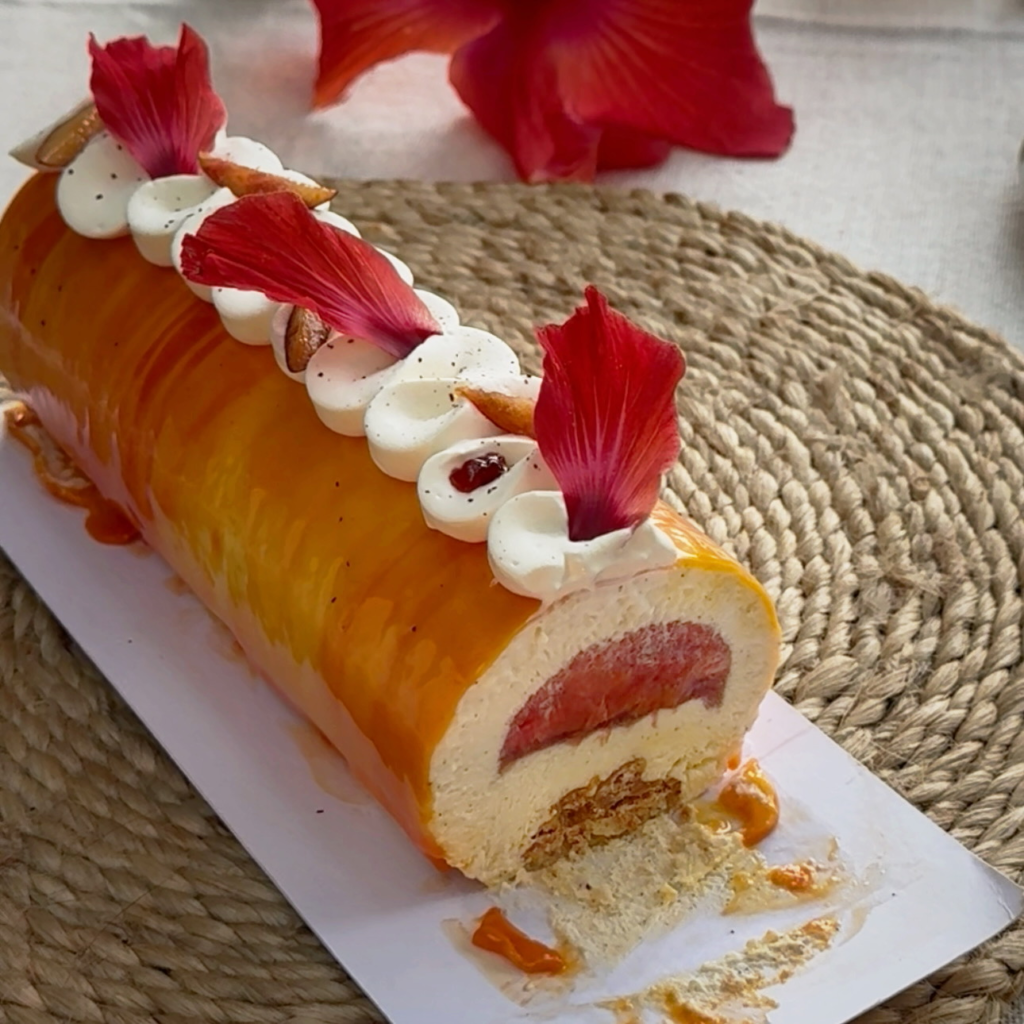
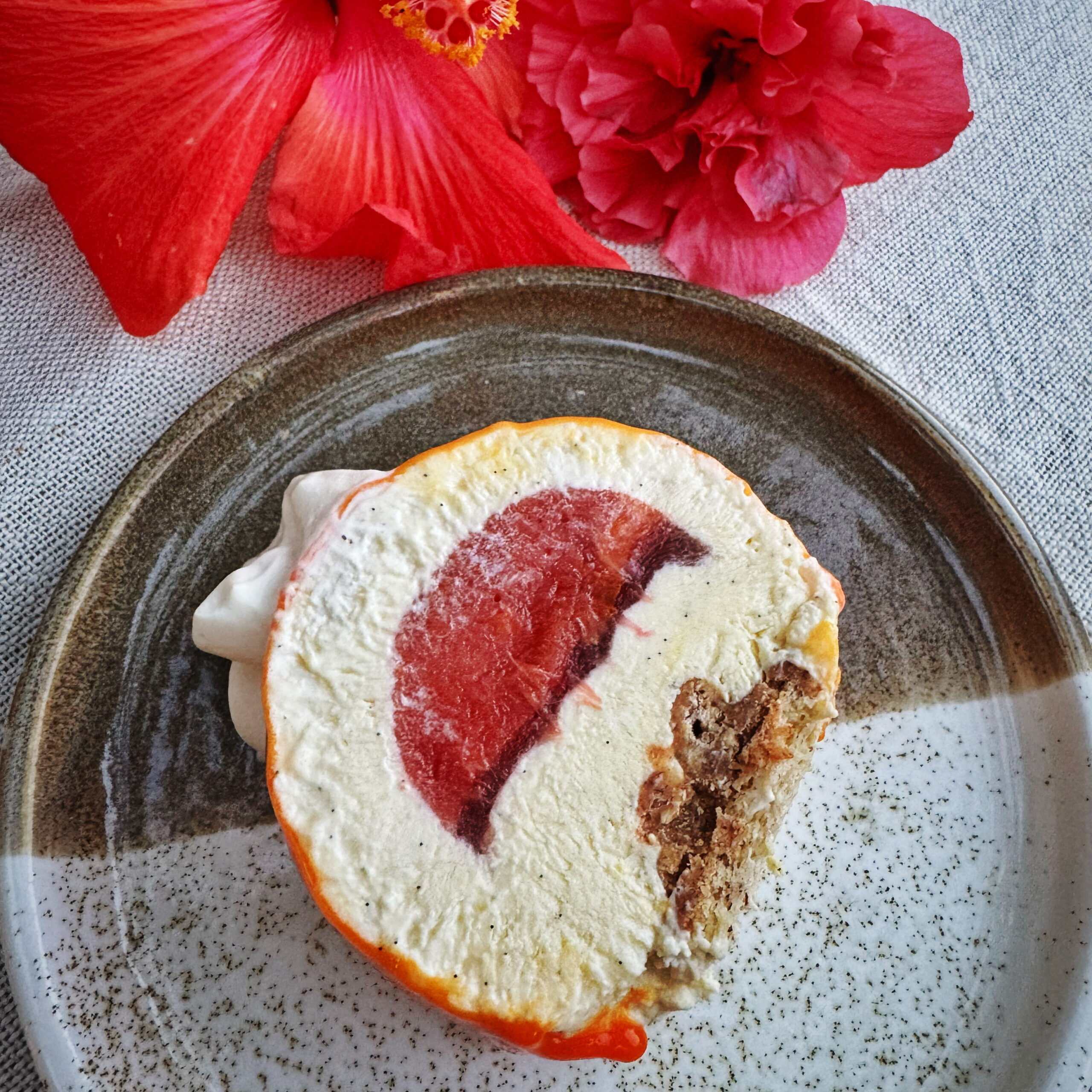
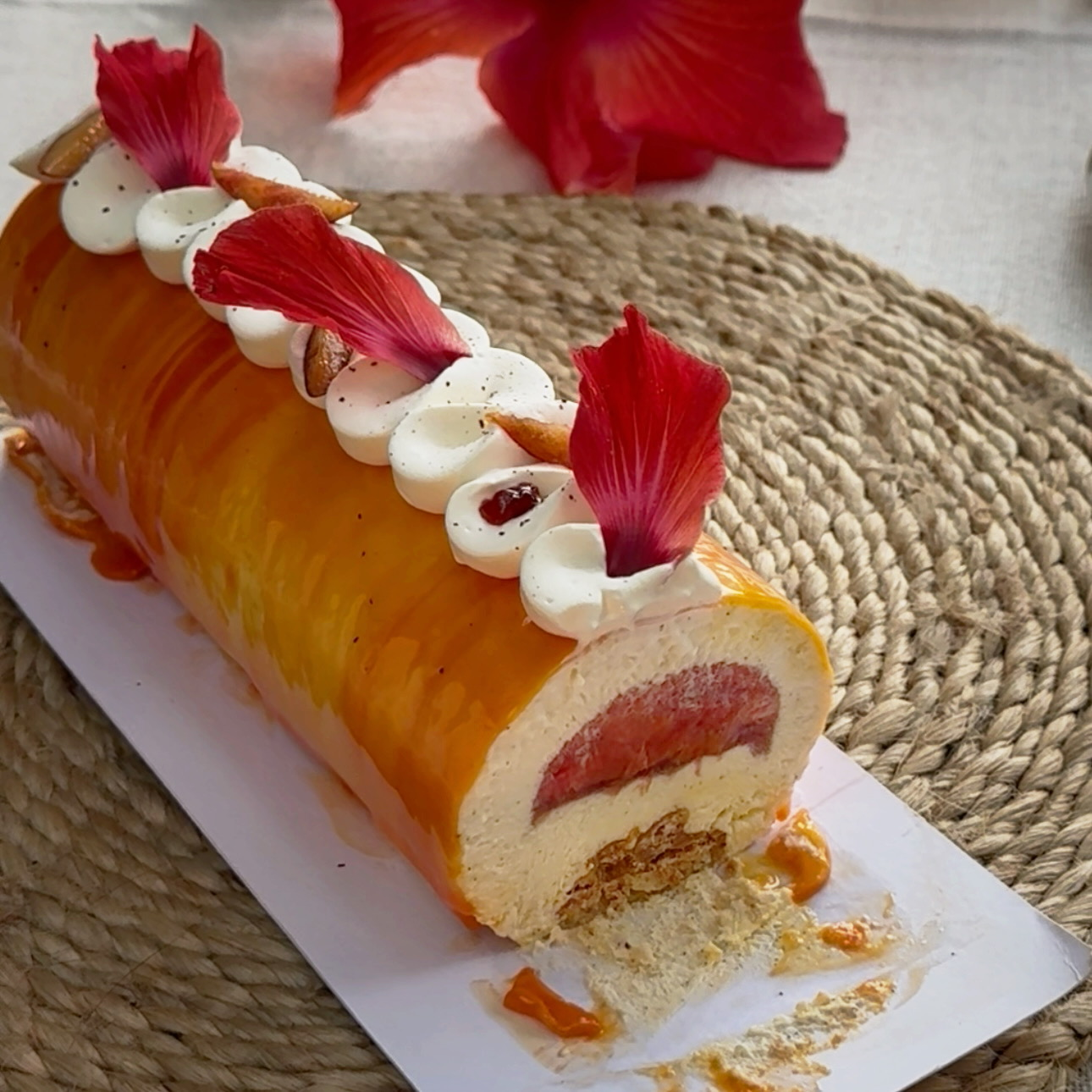
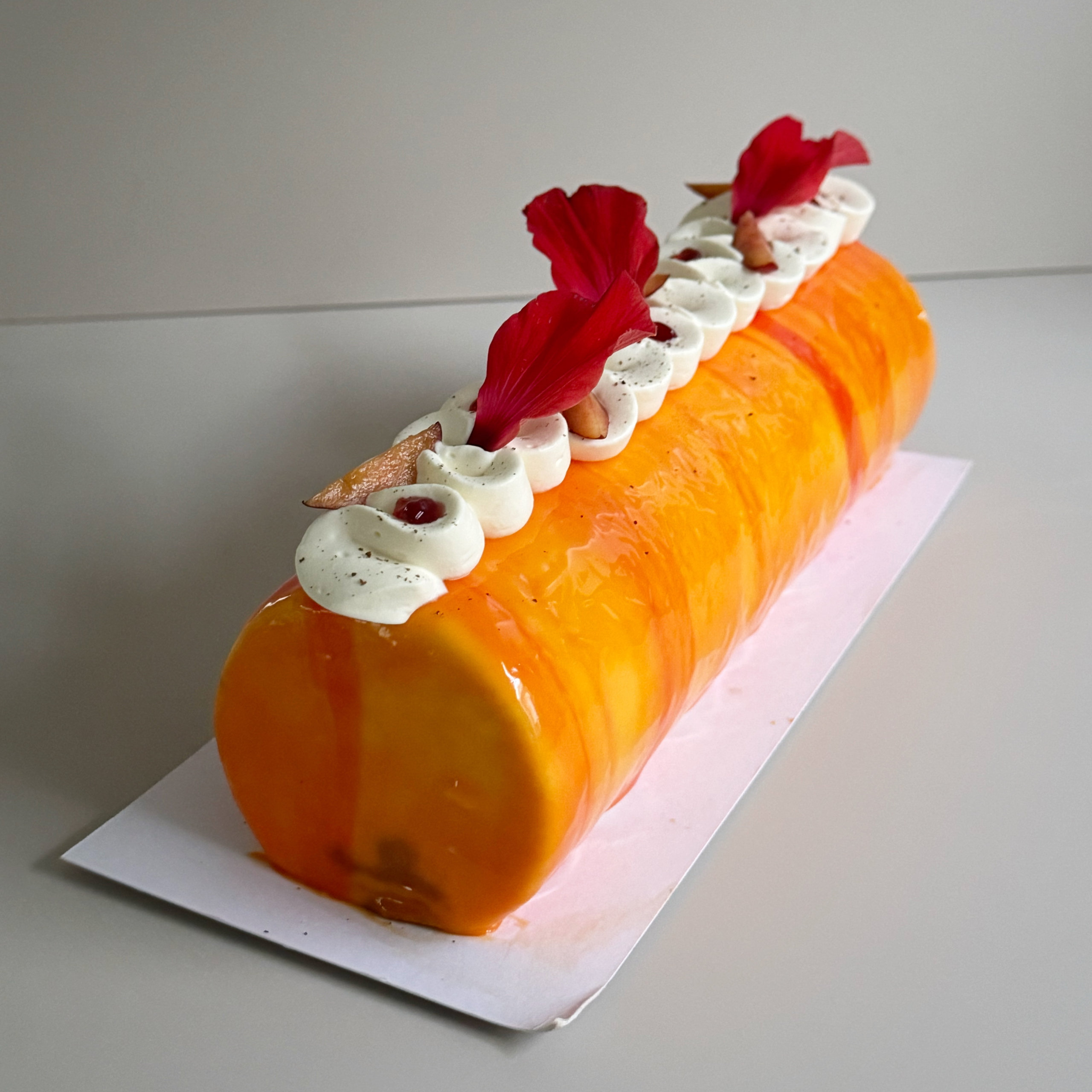
This elegant bûche de Noël combines a light vanilla bavaroise with a vibrant nectarine compote and a delicate hibiscus gel insert. An almond joconde base layered with almond crumble and a praliné–cocoa butter croustillant adds structure and texture. The result is a refined, modern festive dessert with balanced sweetness, gentle acidity and clean cuts, inspired by French pâtisserie techniques.
Ingredients
- 120 g fine almond flour
- 95 g icing sugar
- 180 g whole eggs
- 120 g egg whites
- 25 g caster sugar
- 20 g rice flour
- 10 g cornstarch or potato starch
- 30 g unsalted butter, melted and cooled
Gluten-free Almond Crumble
- 50 g almond flour
- 40 g butter, cold
- 40 g sugar
- 20 g rice flour
- Pinch of salt
Praliné & Cocoa Butter Croustillant Layer
- 60 g almond praliné paste
- 20 g cocoa butter
- 40-50 g baked almond crumble
Nectarine Compote Insert
- 180 g fresh nectarine purée
- 20 g sugar
- 3 g pectin NH
- 5 g lemon juice
Hibiscus Gel Insert
- 11 g dried hibiscus
- 120g water
- 15 g sugar
- 0.8 g agar agar
- 2-3 g lemon juice
Vanilla Bavaroise
- 330 g full-fat milk
- 1 vanilla bean or good vanilla paste
- 82 g egg yolks
- 66 g sugar
- 7.7 g gelatine
- 38 g cold water for blooming
- 400 g whipping cream (35%), cold
Mirror Glaze
- 80 g milk
- 200 g sugar
- 160 g whipping cream (35%)
- 110 g glucose syrup
- 14 g corn starch
- 8 g gelatine
- 40 g cold water for blooming
- several drops of orange and red food colouring
Whipping Cream (Piping)
- 70 g Whipping cream (35%, cold)
Instructions
Almond Joconde
1. Prepare the almond joconde by preheating the oven to 200°C fan.
2. Line a 34 × 41 cm baking tray with baking paper or a silicone mat.
3. Whip the almond flour, icing sugar and whole eggs using the whisk attachment until pale, thick and at ribbon stage.
4. In a separate bowl, whip the egg whites with the caster sugar to soft-medium peaks.
5. Fold one third of the meringue into the almond mixture to loosen it, then gently fold in the remaining meringue.
6. Sift together the rice flour, starch and salt and fold into the batter, then fold in the melted butter last.
7. Spread evenly in the prepared tray and bake for 8–10 minutes until lightly set and springy.
8. Cool completely, then freeze before trimming.
Almond Crumble
1. Prepare the almond crumble by rubbing the cold butter into the almond flour, rice flour, sugar and salt until coarse crumbs form.
2. Bake at 170°C until golden and dry. Cool completely.
Praliné Croustillant Layer
1. To make the praliné croustillant layer, melt the cocoa butter gently and mix it into the almond praliné paste.
2. Fold in the baked crumble.
3. Spread a thin, even layer over the frozen joconde and freeze again until firm.
4. Trim to fit the base of your bûche mould.
Nectarine Compote
1. For the nectarine compote, mix the sugar with the pectin NH.
2. Heat the nectarine purée to around 40°C, whisk in the sugar-pectin mixture and bring to a boil.
3. Cook briefly for about 30–60 seconds, remove from heat and add the lemon juice.
4. Pour into the insert mould to approximately two thirds of the insert height and freeze completely.
Hibiscus Gel
1. Prepare the hibiscus gel by first making a strong hot hibiscus infusion and weighing out 85 g.
2. Whisk the agar agar into the cold infusion, bring to a full boil and boil for 30 seconds.
3. Add the sugar, dissolve fully, remove from heat and add the lemon juice.
4. Pour a thin layer over the frozen nectarine compote and freeze again until fully set.
Vanilla Bavaroise
1. For the vanilla bavaroise, bloom the gelatine in cold water for at least 10 minutes.
2. Heat the milk with the vanilla until steaming. Remove from the heat and cover with cling film. Let infuse for 15 minutes.
3. After, remove the vanilla bean and warm up again.
3. Whisk the egg yolks with the sugar, then temper with the hot milk.
4. Cook gently to 82–84°C, stirring constantly.
5. Remove from heat, add the bloomed gelatine and stir until fully dissolved.
6. Strain if necessary and allow to cool to 30–35°C.
7. Whip the cream to soft peaks and fold it gently into the anglaise in three additions.
Mirror Glaze
1. Bloom the gelatine in cold water for at least 10 minutes.
2. In a bowl, stir together sugar and corn starch.
2. In a pot, combine milk, whipping cream and glucose syrup. Gently heat to around 40°C.
3. Then, add in the sugar and corn starch.
4. Bring to a boil and cook for 1 minute
5. Remove from heat and add in the bloomed gelatine.
6. Transfer the glaze into a tall blender jug.
7. Adding a few drops of orange food colouring at a time, blend until smooth. Be careful not to incorporate bubbles.
8. Once a beautiful orange is reached, transfer 1/3 into a smaller jug. Carefully add a bit of red food colouring and blend together.
9. Cover both jugs with cling film, making sure it touches the surface. Let it cool to 30-35°C (ideal temp for pouring).
Assembly
1. Assemble the bûche by pouring a layer of bavaroise into the mould and coating the sides.
2. Insert the frozen nectarine and hibiscus insert, then cover with more bavaroise.
3. Finish by placing the joconde base with the croustillant side facing the mousse.
4. Level and freeze solid overnight.
5. Once the glaze is at the right temperature, glaze the frozen entremets.
6. Whip the whipping cream and pipe your desired decoration on top. Decorate with nectarine slices, hibiscus gel and fresh or dried hibiscus leaves.
Notes
As with any entremets, several components will need freezing before the assembly and final freezing.
Make a good plan ahead of time, as it will be necessary to make this cake over several days.
- Prep Time: 3
- Freezing: 2 nights, or at least 5-6h each
- Cook Time: 45
- Category: Dessert
- Method: French pâtisserie, layered entremets
- Cuisine: French
